

How to Brush Your Dog's Teeth and Why It's So Important
By the age of three, many dogs have already developed oral health problems such as tartar buildup and gum disease. These problems can sometimes affect their whole body, making dental care one of three critical components of your dog’s health: nutrition, exercise, and toothbrushing.
This guide helps you understand why brushing your dog’s teeth matters, how to do it comfortably and safely, and the importance of a tooth-cleaning routine for your dog. We’ve also put together ideas for solving the problems you might face along the way.
Just a reminder: this is general information about brushing dogs’ teeth. For dental care recommendations for your unique dog, it’s always a good idea to talk with your veterinarian.
Key Takeaways
- Brushing your dog’s teeth reduces plaque and tartar build-up that can lead to gum disease and discomfort.
- Brushing your dog’s teeth daily is best but doing it several times per week provides many important benefits.
- To brush your dog’s teeth, get them comfortable with mouth handling, then introduce toothpaste and toothbrushes, begin brushing just a few teeth, and continue to add more until you’re brushing all of them. Offer consistent rewards throughout.
- You know you’re brushing your dog’s teeth right if they have fresh breath, healthy gums, stable teeth, and an infrequent need for professional cleaning.
- Dental chews and toys reinforce your dog’s oral health during brushing sessions.
Why Brushing Your Dog’s Teeth Matters

Brushing your dog’s teeth has several important benefits. It helps prevent plaque and tartar buildup, helps to get rid of bad breath, reduces the frequency of professional cleanings, and supports long-term oral health. It also gives you a chance to notice broken teeth, mouth lumps, and gum changes, and more serious health effects of poor dental care in dogs. It also gives you a chance to notice broken teeth, mouth lumps, and gum changes.
A healthy mouth just feels better for your dog, too!
What You’ll Need
You only need a few things to brush your dog’s teeth. Choose a soft-bristled, dog toothbrush or finger brush and dog-safe toothpaste. Avoid using your own toothpaste because it contains fluoride, which is unsafe for dogs, and sometimes xylitol, a dog-toxic artificial sweetener.
Finally, you want to have treats on hand to encourage and reward cooperation. For the most successful experience, choose a quiet, calm place familiar to your dog.
Choosing the Right Brush Type
See which of these three toothbrushes is right for your dog:
- Finger brushes: If you have a small-breed dog, a puppy, or a dog prone to anxiety, consider a finger brush. It can give you the most cleaning control. Be aware, though, they have limited reach to your dog’s back teeth because of their size.
- Standard soft brushes: This is a great choice if you have a medium to large dog. It reaches all of their teeth for a thorough cleaning.
- Dual-headed brushes: A dual-headed toothbrush has a different brush at each end: a bigger one for reaching your dog’s molars and a smaller, more angled one for their front teeth.
How to Brush Your Dog’s Teeth Step by Step
Table of Contents
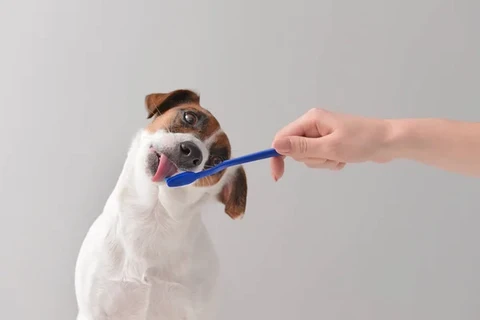
So, you have the toothbrush, the toothpaste, and the treats. Now, how do you actually brush your dog’s teeth? Many people find the idea overwhelming, but we’ve broken it down into doable steps.
Step 1: Get Your Dog Comfortable with Mouth Handling and Toothpaste
Before you try brushing your dog’s teeth, they need to be comfortable with your hands in their mouth. Sit with your dog and gently lift their lips and touch their teeth and gums. Let them get comfortable with those sensations.
Next, put a small amount of toothpaste on your finger and offer it to your dog. You want to introduce the taste before you use it to clean their teeth.
Don’t make these sessions too long. Short and sweet (and lots of treats!) are what you’re aiming for.
Step 2: Introduce the Toothbrush
Once your dog is used to you handling their mouth and familiar with the toothpaste, introduce the toothbrush. Apply the flavored toothpaste and give your dog a chance to sniff it. You can also try touching it to their mouth.
Like in the previous step, this slow progression will help your dog feel more relaxed before you actually attempt to brush their teeth.
Step 3: Begin Brushing in Small Sections
Time to actually brush! Apply a small amount of toothpaste to the brush and begin with your dog’s canine teeth (the four fang-like teeth on the top and bottom, next to the incisors). Move the toothbrush in a gentle circular motion, reaching the outer surfaces and gum line.
If you sense your dog needs a break, leave it at that. You can gradually add teeth over a few days.
Step 4: Expand to Full Brushing
Once you feel like your dog is ready for a full-mouth brushing, focus on the upper teeth first. These tend to have more plaque build-up, so you want to tackle them while your dog is fresh and willing to cooperate. Then move to the lower teeth.
Don’t worry too much about the inner surfaces of your dog’s teeth. Their tongue does a good job of cleaning those places. Instead, target the outer surfaces, which are often covered with plaque.
Remember your dog’s comfort and sense of safety. Don’t hold their mouth closed or force it open and try to limit how deep you reach into their mouth.
Step 5: Reward Your Dog
Give your dog treats every time you finish brushing. If your dog has a strong, positive association with it, you’ll be able to continue their oral hygiene and promote good health. This is a big win!
If your dog has fresh (or at least fresher!) breath, healthy gums, and strong teeth, you know you’re brushing their teeth right. Consistency is key!
How Often Should You Brush Your Dog’s Teeth?
Daily brushing is ideal, but realistically, it’s not always possible. So, try to brush your dog’s teeth at least 2-3 times a week. This will still allow you to control the plaque and tartar build-up in your dog’s mouth.
More important than how much brushing you can get to in a single week is creating a sustainable routine you can stick to. While this is true for all dogs, it's especially true for older and small-breed dogs, who can be more at risk for dental issues.
What to Do Between Brushing Sessions
On the days you can’t brush your dog’s teeth, offer them things to chew. Dental-specific treats support your dog’s oral health. The natural chewing motion scrubs off plaque and tartar, and saliva neutralizes acid and rinses away food particles that lead to bad breath.
Additionally, make sure your dog always has fresh water available, which also washes away bits of food. You can try giving them harder kibble on those non-brushing days for the same purpose.
Solving Common Problems
Don’t worry if your dog resists getting their teeth brushed. You may just need to identify their specific challenge so you can address it. However, if you can’t fix the problem at home, contact your veterinarian to rule out oral health issues, like dental pain and gum sensitivities.
Here are some typical challenges, their likely causes, and solutions to try:
Issue | Likely Cause | Solution |
| Dog pulls away from brush | Unfamiliar sensation, moving too fast | Spend 3-5 days on mouth handling alone before reintroducing brush |
| Biting at brush | Fear response, not aggression | Let dog lick toothpaste from brush for several sessions before brushing |
| Refusing to open mouth | Lack of trust, previous negative experience | Reward jaw relaxation with treats; never force mouth open |
| Excessive drooling | Normal response to toothpaste flavor | Switch flavors if desired; drooling usually decreases with familiarity |
| Gagging when brush reaches back teeth | Oversensitivity, going too deep | Focus on outer surfaces only; gag reflex area doesn't need brushing |
Note: This guidance provides general educational information only. Greenies does not diagnose, treat, or provide behavioral recommendations. Any concerns about behavior should be addressed by a licensed veterinarian.
Support Your Dog’s Dental Health Every Day

Regularly brushing your dog’s teeth is the best way to keep their teeth, gums, and whole mouth healthy. But you don’t have to rely on brushing alone.
GREENIES™ Dental Treats and Chews provide extra cleaning action in-between brushing sessions. Dental treats can be a helpful part of your dog’s plaque build-up and breathfreshening routine. You’ll love the benefits, and your dog will love the taste!
Contributor
Dena Bley is a registered veterinary technician with 25 years of experience and Sr. Expert Advice Team member. She began her career as a researcher at P&G before joining the Pet Health and Wellness Team at Mars 2014. With deep roots in Ohio, Dena brings over a decade of research experience and a passion for animal care, complemented by her hands-on work with a variety of animals on her family’s small farm.
References
- https://www.avma.org/resources/pet-owners/petcare/pet-dental-care(open in new tab)
- https://www.aspca.org/pet-care/dog-care/dog-grooming-tips(open in new tab)
- https://www.banfield.com/Wellness-at-banfield/Dental-care/Dental-disease-in-catsand-dogs(open in new tab)
- https://www.banfield.com/Wellness-at-banfield/Dental-care/How-to-brush-dog-andcat-teeth(open in new tab)
- https://wsava.org/wp-content/uploads/2022/06/GDC-Toothbrushing-Toolkit-1.pdf(open in new tab)
- https://www.petpoisonhelpline.com/poison/xylitol/(open in new tab)