

How to Brush Your Cat's Teeth and Why It's So Important
Brushing your cat's teeth calls for three essential items: a toothbrush, cat-safe toothpaste, and plenty of patience. Once your cat is familiar with the process, try making it part of your daily routine.
It feels good to take care of your cat’s dental health, but it’s not always easy. This guide covers when to start dental care for your cat, why it matters, what supplies to use, how to train your cat, and what alternatives to try when brushing isn't possible.
Remember, although we can provide general cat toothbrushing information, you should always ask your veterinarian about your cat’s specific oral health needs.
Key Takeaways
- Dental disease can affect cats by the time they’re three years old, leading to toothache, tooth loss, and other health challenges.
- Brushing your cat’s teeth from the time they’re a kitten is best, but adult cats can learn, too.
- You need a cat-safe toothpaste and a soft-bristled or finger brush to clean your cat’s teeth.
- To brush your cat’s teeth, get them comfortable with mouth handling, introduce toothpaste and toothbrushes, then begin brushing just a few teeth, continuing to add more until you’re brushing them all. Offer consistent rewards throughout.
- Brushing your cat’s teeth every day is ideal
- Dental treats, water additives, and a diet focused on dental care support your cat’s oral health
Why Brushing Your Cat's Teeth Matters
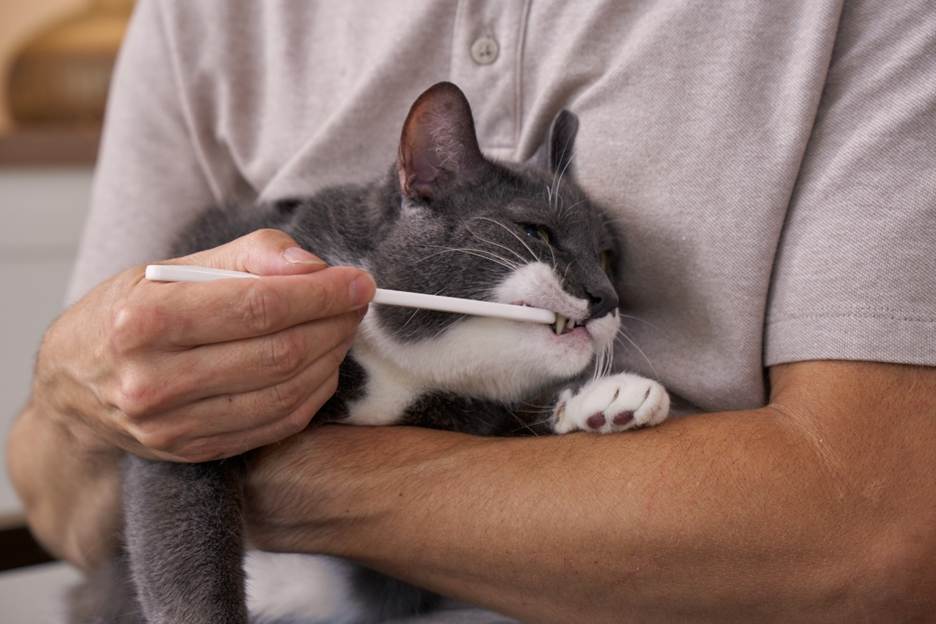
Dental disease can affect some cats by the time they’re three years old. That’s why your cat’s oral health is so important for their overall well-being, and this means regular toothbrushing.
Keeping your cat’s teeth may help prevent plaque and tartar buildup, which can cause gum disease and tooth loss. Regular brushing also helps you find problems like broken teeth, lumps in your cat’s mouth, and changes to their gums.
If you can teach your cat a toothbrushing routine, they may not need as many professional dental cleanings, which is good news for both of you!
When to Start Brushing Your Cat's Teeth
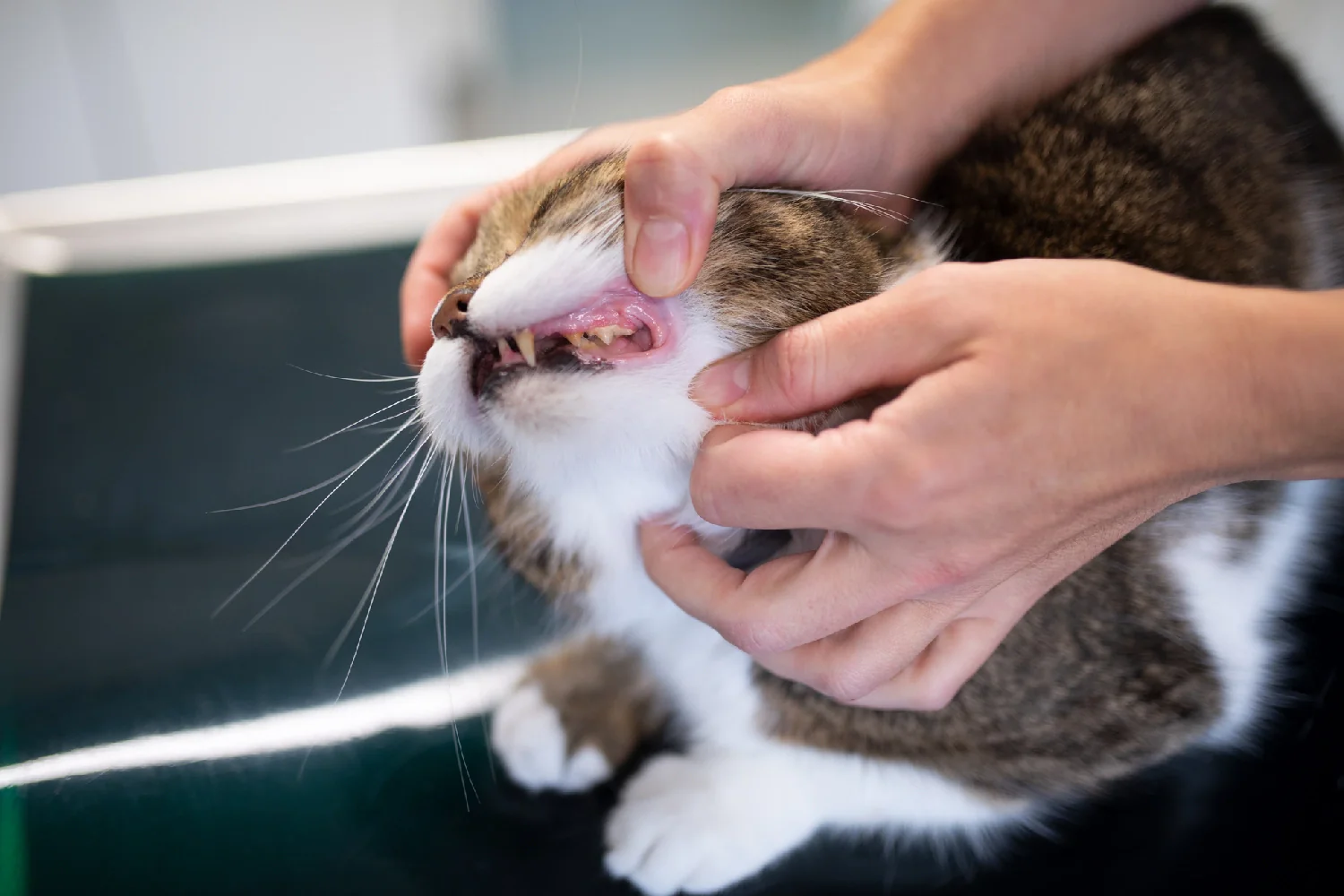
Table of Contents
Kittens
The best age to begin brushing your cat’s teeth is around six months old, after their adult teeth are fully in. This lets them get used to the process from a young age.
Adult Cats
If you didn’t have the chance to brush your cat’s teeth when they were little, you can still teach them later in their life. It just may take you a little longer.
Consider having a veterinarian do a thorough dental cleaning before you tackle brushing their teeth at home. They can also check your cat’s oral health to make sure their mouth and teeth are healthy. Then you can take it from there!
What You Need to Brush Your Cat's Teeth
Toothpaste
Choose a toothpaste specifically designed for cats with the Veterinary Oral Health Council (VOHC) Seal of Approval. Human toothpaste contains fluoride, which isn’t good for your cat, and sometimes xylitol, which is actually toxic for them.
Besides being safe, cat-specific toothpaste comes in flavors cats love, like poultry and seafood. They’re also usually designed with enzymatic formulas that fight bacteria even after you finish brushing.
Choosing the Right Brush
Next, choose a brush that best suits your cat’s needs:
- Finger brushes: Consider using one if you have a kitten, small cat, or an anxious cat. Finger brushes give you maximum control, but they may not reach your cat’s back teeth.
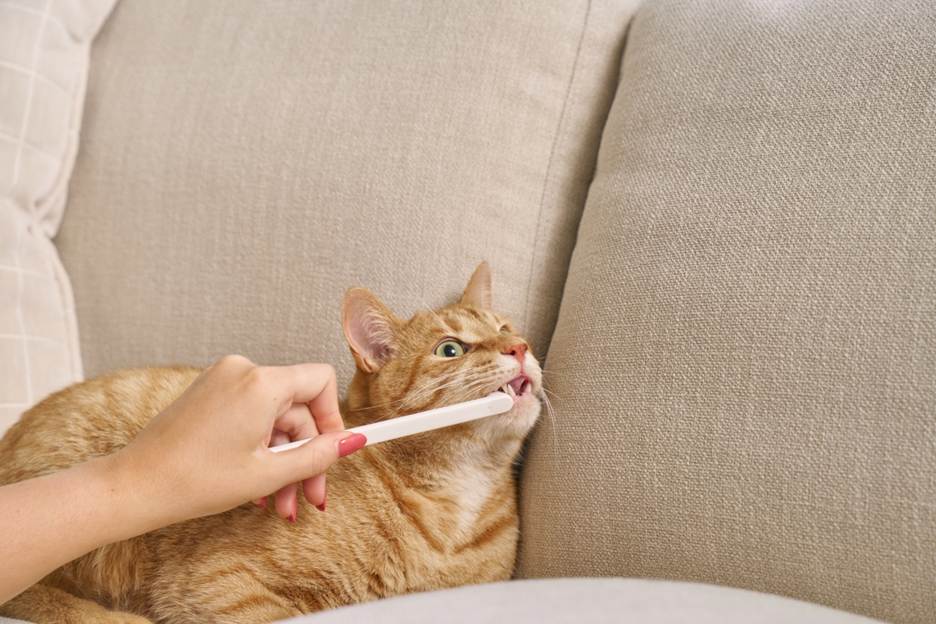
- Standard soft brushes: These toothbrushes reach all teeth. This is the way to go if your cat is comfortable with brushing.
- Gauze or soft cloth: If your cat bristles at bristles, this is a good choice. You can wrap it around one of your fingers for gentle cleaning.
How to Brush Your Cat's Teeth Step by Step

Once you’ve gathered your supplies, what’s the best way to get this new toothbrushing routine rolling? Let’s take a look.
Step 1: Get Your Cat Comfortable with Mouth Handling
The first thing to do is focus on making your cat as comfortable as possible. Gently lift their lips and touch their teeth and gums. Once they have the hang of that, put some toothpaste on your finger so they can investigate it.
Keep these introductory sessions short. Reward your cat generously and regularly as they get used to the process.
Step 2: Introduce the Toothbrush and Toothpaste
Next you’ll need to help your cat get used to the idea of a toothbrush. See if they’ll taste toothpaste off of it. You want your cat to connect relaxation with a delicious (toothpaste) treat.
Step 3: Begin Brushing in Small Sections
To brush your cat’s teeth, first brush the canines (the pointy, sharp teeth used for tearing food) and the ones behind them (called the cheek teeth). Put a little toothpaste on the brush and, using gentle, circular motions, clean the outer surfaces of the teeth and the gum line.
Stick with these two sets of teeth for a few days, and then gradually begin including others.
Step 4: Expand to Full Brushing
Once you’re brushing all of your cat’s teeth, continue to focus on the outer surfaces. Plaque builds up the most here, and your cat’s tongue does a good job getting at the inner surfaces.
Lift your cat’s lips carefully. Don’t hold their mouth closed or force their jaw open. Be mindful of not putting the toothbrush too deeply into your cat’s mouth. The key is to be gentle.
Step 5: Reward Your Cat
Be generous with praise and treats after every brushing session. This way, you always end on a good note. If your cat has positive associations with toothbrushing, you’re more likely to have positive (and productive!) sessions. Consistency is key!
How Often Should You Brush Your Cat's Teeth?
Brushing every day is best, but we know life can get in the way. If everyday brushing simply isn’t possible, you should still get great results by brushing two or three times a week instead. Try to be consistent with whatever schedule you choose.
What to Do Between Toothbrushing Sessions

Consider giving your cat dental treats and chews on the days you can’t brush their teeth. These treats are specifically designed with a hard texture that helps clean teeth, and chewing helps reduce plaque.
Here’s another idea. If you usually feed your cat wet food, try switching to dry kibble for extra teeth-cleaning action. (Just remember to adjust portion sizes and transition slowly.) And always have fresh water available. It not only hydrates your cat, but it also rinses food particles from their mouth.
Finally, if your cat will tolerate it, try adding dental-specific additives to their water or applying dental gel to their teeth. Both can reduce oral bacteria, so ask your veterinarian which is best for your cat.
And, of course, it’s always a good idea to schedule regular professional cleanings.
Tackling Common Challenges
It’s not uncommon for cats to resist toothbrushing, so don’t be worried if you run into some challenges along the way. You may be able to get your cat on board by making small adjustments.
| Challenge | Likely Cause | What to Try |
| Cat runs away when they see the toothbrush | Negative association or moving too fast | Go back to earlier training steps. Keep brush out of sight until your cat is calm and settled. |
| Cat clamps mouth shut | Discomfort or resistance to handling | Lift the lip and brush outer surfaces only or try a finger brush instead. |
| Cat bites or swats at the brush | Fear, overstimulation, or pain | Shorten sessions significantly. Rule out mouth pain with a veterinary exam. |
| Cat tolerates front teeth but not back | Back teeth are harder to reach | Work gradually toward back teeth over several weeks. Focus on canines and premolars first. |
| Gums bleed during brushing | Possible gingivitis or brushing too hard | Use lighter pressure. If bleeding persists, schedule a vet dental exam. |
| Cat was doing well but now resists | Routine disruption or developing mouth pain | Return to reward-heavy short sessions. Consult a veterinarian if resistance is sudden. |
If any of these problems persist, it’s a good idea to talk to your veterinarian so they can check for any health issues and help you determine what to do next.
Signs of Dental Problems in Cats
Your cat may have dental problems if you notice any of these symptoms:
- Bad breath
- Red or swollen gums
- Visible tartar buildup
- Drooling
- Difficulty eating
- Pawing at their mouth
- A preference for soft food over hard food
Cats are good at hiding pain, so you may miss the early stages of dental disease. This is why regular checkups with your cat’s veterinarian are so important. If you see any of the above signs, touch base with your veterinarian before you brush your cat’s teeth on your own.
Support Your Cat's Dental Health with GREENIES™ Dental Cat Treats

Regularly brushing your cat’s teeth is the best way to ensure their dental health. For those times when a toothbrush isn't an option, dental treats are a perfect solution. They help reduce plaque and freshen your cat's breath, making dental care easy and enjoyable for both of you.
GREENIES™ Feline Dental Treats and Chews have a crunchy texture designed to help clean your cat’s teeth as they chew. While you’ll love them for the oral health benefits, your cat will love them for their delicious taste!
Contributor
Dena Bley is a registered veterinary technician with 25 years of experience and Sr. Expert Advice Team member. She began her career as a researcher at P&G before joining the Pet Health and Wellness Team at Mars 2014. With deep roots in Ohio, Dena brings over a decade of research experience and a passion for animal care, complemented by her hands-on work with a variety of animals on her family’s small farm.
References
- https://www.vet.cornell.edu/departments-centers-and-institutes/cornell-feline-healthcenter/health-information/feline-health-topics/feline-dental-disease
- https://www.avma.org/resources-tools/pet-owners/petcare/pet-dental-care
- https://www.aaha.org/resources/2019-aaha-dental-care-guidelines-for-dogs-and-cats/
- https://icatcare.org/articles/how-to-brush-your-cats-teeth